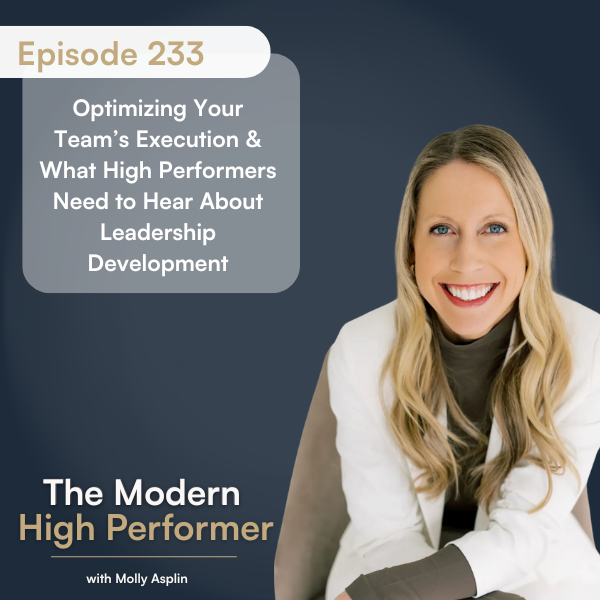
If you lead a smart, capable team but still feel like everything funnels back to you, this episode is for you.
I see this pattern constantly with high performers, executives, founders, and directors: you’ve hired well, you trust your people, and yet you’re still in the weeds. Projects come back half done, deadlines slip, details get missed — and instead of addressing it directly, you quietly fix it yourself because it’s faster, easier, and honestly… you can do it better.
But that’s exactly how leaders become the bottleneck.
In this episode, I break down how to build real ownership and accountability on your team — without micromanaging, lowering standards, or burning yourself out. We talk about the specific leadership language that empowers your team to fully own their work and the mindset shifts required to move from rescuer to builder.
Why Leaders Become the Bottleneck (Even With a Strong Team)
The Hidden Cost of “I’ll Just Fix It”
Most leaders I work with don’t intend to micromanage or disempower their teams. It starts innocently: you step in to clean something up, tie a loose end, or “just finish it this one time.”
But every time you do that, you reinforce two things:
- Your team learns that you’ll step in.
- You train yourself to stay stuck in execution mode.
Over time, this creates resentment, exhaustion, and the feeling that delegation “doesn’t work” — when in reality, the structure of delegation needs to evolve.
Accountability Isn’t Demanded — It’s Designed
Ownership Drives Engagement and Results
Gallup research shows that employees who feel true ownership over their work are 2.5x more engaged and significantly more committed to team goals. Accountability isn’t about pressure or control — it’s about creating conditions where people want to take responsibility.
That starts with leadership language.
One Question That Changes Everything
“Why Didn’t It Get Done?”
This question is simple — and incredibly powerful.
When something misses the mark, asking “Why didn’t it get done?” shifts the conversation away from blame and toward ownership. It invites reflection, prioritization, and accountability without defensiveness.
I share a personal example from my corporate career where this exact question permanently changed how I approached deadlines. Not because I was afraid — but because I felt trusted to own the outcome.
Letting Your Team Own Work — Start to Finish
Stop Doing It Better Yourself
One of the hardest leadership shifts is letting go of the belief that your way is the only acceptable way.
When leaders constantly refine, correct, or finish work for their teams, they unintentionally:
- Teach dependency
- Reduce learning
- Kill confidence
Instead, I encourage leaders to let their team fully own projects — even through the messy middle — and then debrief afterward with reflection questions like:
- What went well?
- What didn’t work?
- What would you do differently next time?
This reflection builds competence far faster than correction ever will.
The Language That Builds Ownership (Instead of Rescuing)
Stop Rescuing — Start Empowering
Rescuing language sounds like:
- “I’ll just take this.”
- “Don’t worry, I’ll fix it.”
- “I’ll finish this part.”
Empowering language sounds like:
- “What do you need to move this across the finish line?”
- “I trust your judgment — walk me through your thinking.”
- “What support would help you deliver an even better outcome?”
The difference is subtle — but the impact is massive.
Vision Is a Hidden Driver of Execution
Why Teams Need a Clear “Why”
One of the most overlooked drivers of accountability is team vision. When people understand:
- What they’re working toward
- Why it matters
- How their role contributes
They’re 4.5x more likely to feel empowered and accountable.
This applies whether you lead a small team or operate inside a large organization. Team-level vision matters — and it’s one of the fastest ways to improve execution without adding pressure.
Psychological Safety Is Not Optional
High Standards + Safety = High Performance
Psychological safety is one of the strongest predictors of team effectiveness. Without it, people hide mistakes, delay asking for help, and defer decisions — which puts more pressure on the leader.
Safety does not mean low standards.
It means:
- Mistakes are discussed, not punished
- Questions are welcomed
- Ownership is expected and supported
When leaders model accountability themselves, teams follow.
What High Performers Need to Hear About Leadership Development
Accountability Is Co-Created
The most accountable teams I’ve seen aren’t driven by fear or pressure — they’re built through:
- Clear expectations
- Shared language
- Ongoing reflection
- Trust over control
Leadership development isn’t about enforcing accountability — it’s about designing environments where ownership is the natural response.
A Resource That Supports High Performance for your Team
One tool I personally use every day is GrowthDay. It’s a high-performance platform that can help your team be more focused, with higher ownership — especially during busy and demanding seasons.
The daily audio, reflection prompts, and action-oriented structure make it easy to build momentum without overwhelm.
You and your team can try GrowthDay free for seven days using the link here.
Final Thoughts
If you’ve been feeling like:
- You’re doing too much
- Your team relies on you too heavily
- Delegation feels frustrating instead of freeing
This isn’t a failure of leadership — it’s a signal that your leadership structure is ready to evolve.
Pick one phrase, one question, or one shift from this episode and try it this week. Small changes in language create massive changes in execution.
If this episode helped you, share it with another leader who might be feeling stuck in the weeds. We’ll talk soon.
Enjoyed this episode? Here are a few ways to stay connected:
If today’s conversation resonated, share it with a friend, teammate, or leader who’s ready to lead differently. That’s how we grow modern, high-performing leaders and teams.
1.) Share the episode: Hit the share button and text it to someone who would benefit.
2.) Subscribe for weekly tips: Get my short, practical insights delivered every week to your inbox—perfect for your workday, your home life, or even to kick off a team meeting. Subscribe here.
3.) Leave a rating and review: If you’re loving the show, a quick review helps more people discover these conversations (and it means a lot).
Thanks for being part of the movement toward a more human, high-performing world.