
If you are leading a team, a company, or an organization right now, you already know this truth: the hardest part of leadership is rarely strategy. It’s people. It’s change. And it’s the conversations you don’t want to have—but absolutely need to.
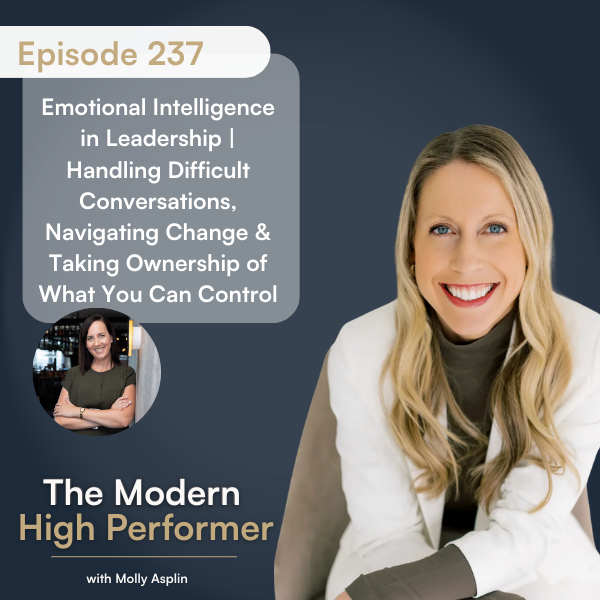
In this episode, I sit down with emotional intelligence and human behavior specialist Amy Jacobson to unpack what emotionally intelligent leadership really looks like in practice. We talk about difficult conversations, change fatigue, accountability, and why emotional intelligence (EQ) is no longer a “nice to have”—it’s a leadership advantage.
Why Emotional Intelligence Is a Leadership Superpower Right Now
The Misconception That EQ Is “Soft”
One of the biggest misconceptions leaders hold is that emotional intelligence is soft or optional. In reality, it is the engine behind ownership, clarity, accountability, and results.
IQ helps us understand what to do. Emotional intelligence determines how and why we do it.
High-performing leaders often focus heavily on strategy and outcomes. But without emotional intelligence, performance eventually plateaus. Mindset, self-awareness, and emotional regulation are what allow leaders to sustain high performance under pressure.
The Rising Importance of EQ in an AI-Driven World
As technology evolves, the human element becomes even more valuable. Systems and tools can handle data, analysis, and efficiency. But connection, empathy, trust, and influence still require emotional intelligence.
In many ways, the more automated work becomes, the more people crave authentic human leadership.
Red Flags That Emotional Intelligence Is Missing in a Team
Blame Culture and Lack of Ownership
One of the clearest signs of low emotional intelligence is a culture of blame. When leaders or team members constantly point fingers, wait for direction, or avoid responsibility, performance suffers.
Emotionally intelligent teams operate differently. They understand their role in every interaction and take ownership—even when leadership support is imperfect.
Waiting Instead of Driving Growth
Another red flag is passivity. Leaders often hear complaints like:
- “My manager doesn’t develop me.”
- “No one is giving me feedback.”
- “No one is creating a plan for me.”
While leadership support matters, emotional intelligence requires individuals to drive their own growth. Ownership is not just a leadership trait—it’s a performance mindset.
What Emotionally Intelligent Leaders Do Differently
They Lead Without Needing All the Answers
A powerful insight from this conversation is that great leaders don’t need to be technical experts in every area. Instead, they build balanced teams filled with diverse strengths and perspectives.
Emotionally intelligent leaders:
- Empower specialists
- Encourage diverse thinking
- Communicate with clarity and grounded confidence
- Demonstrate vulnerability and humility
They create environments where performance thrives because people feel supported—not controlled.
They Balance Results With Human Connection
Emotionally intelligent leadership is not about avoiding accountability. It’s about delivering accountability in a way that motivates ownership and growth rather than triggering defensiveness.
This balance is what separates average leaders from transformational ones.
Navigating Change With Intelligence, Not Just Effort
Understanding the Psychology of Change
Amy introduces the concept of “change intelligence,” which combines change management with emotional awareness. Before people can adopt new systems or processes, their minds must process the disruption.
Every change involves loss—even positive change. Leaders often underestimate this reality. Familiar routines create identity, safety, and expertise. When those routines shift, resistance is natural.
Successful leaders involve teams earlier, acknowledge emotional impact, and create psychological safety during transitions.
Why Change Fails More Often Than Leaders Realize
Many change initiatives fail not because the strategy is flawed—but because people never truly buy in. Without emotional readiness, teams revert to old habits or adopt new processes halfway.
Change intelligence requires leaders to address mindset first, execution second.
How Emotional Intelligence Transforms Difficult Conversations
The “Ask, Ask, Tell” Framework
Difficult conversations often trigger fear—for both leaders and employees. The brain’s fight-or-flight response can cause over-preparation, defensiveness, and emotional escalation.
Emotionally intelligent leaders approach these conversations differently. They begin with curiosity.
Key questions might include:
- How are you really doing right now?
- How do you feel your performance has been?
- What challenges are you experiencing?
- What support do you need?
By asking first, leaders encourage self-awareness and ownership. If awareness is lacking, they shift to clarity—defining expectations, identifying performance gaps, and outlining consequences or opportunities.
Why Consequences and Outcomes Matter
Human behavior is driven by perceived gain or loss. Leaders who communicate clear outcomes help team members understand why change or improvement is necessary.
This approach transforms accountability conversations from confrontation into alignment.
Final Leadership Reflection
If you are navigating change, managing pressure, or leading complex teams right now, emotional intelligence is not optional. It is the skill set that determines whether your strategy succeeds or stalls.
This episode is an invitation to lead differently—to handle conversations with intention, embrace ownership, and build teams that thrive through change.
Because leadership is not just about delivering results. It’s about creating the conditions where people can perform at their best.
Enjoyed this episode? Here are a few ways to stay connected:
If today’s conversation resonated, share it with a friend, teammate, or leader who’s ready to lead differently. That’s how we grow modern, high-performing leaders and teams.
1.) Share the episode: Hit the share button and text it to someone who would benefit.
2.) Subscribe for weekly tips: Get my short, practical insights delivered every week to your inbox—perfect for your workday, your home life, or even to kick off a team meeting. Subscribe here.
3.) Leave a rating and review: If you’re loving the show, a quick review helps more people discover these conversations (and it means a lot).
Thanks for being part of the movement toward a more human, high-performing world.